Fetal position type
Longitudinal Lie
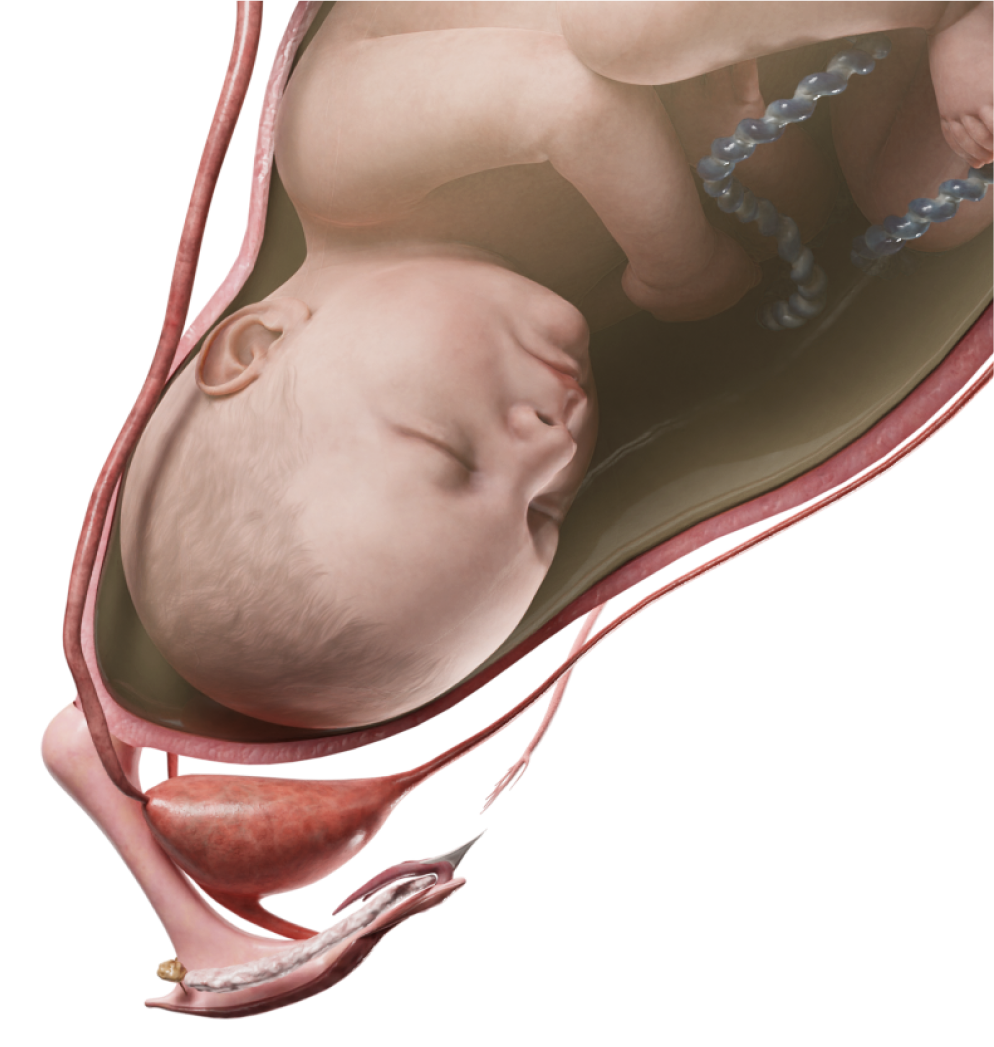
The fetal position in the longitudinal lie is assessed after week 37 of pregnancy or during labor. This position depends on the location of the fetal back in relation to the uterine border — to the left or to the right. Accordingly, the position may be classified as left or right.
Transverse Lie
In the transverse and oblique lie, the position is determined based on the location of the fetal head and may be classified as either left or right.
The fetal position type is assessed by the position of the back during pregnancy and by the position of the occiput during labor. Thus, when the fetal occiput and back are directed anteriorly, the position type is classified as anterior. If the fetal back is positioned to the left, the presentation is referred to as left occiput anterior. When the fetal back is palpated on the right, the presentation is referred to as right occiput anterior. The posterior fetal position type indicates that the fetal back and head are located posteriorly, meaning the back aligns with the mother's spine.
The most common variation during labor is the left occiput anterior position. Note that the optimal fetal position during labor also depends on the shape of the mother’s pelvis. The gynecoid pelvic type is the most common and is primarily associated with the left position during labor. However, the right position has been shown to be physiological, with no difference in the risk of complications during labor. The majority of fetuses spontaneously change their position from posterior to anterior when labor begins. Some studies have indicated that the posterior position may prolong labor and increase the likelihood of a cesarean section. However, the versatility of pelvic types, fetal presentations, and their sizes means that the labor process is not solely dependent on the fetal position type.